Platform / Finance

See the financial impact of every operational activity

Connect operational and financial records to reduce reconciliation effort and support better decisions.

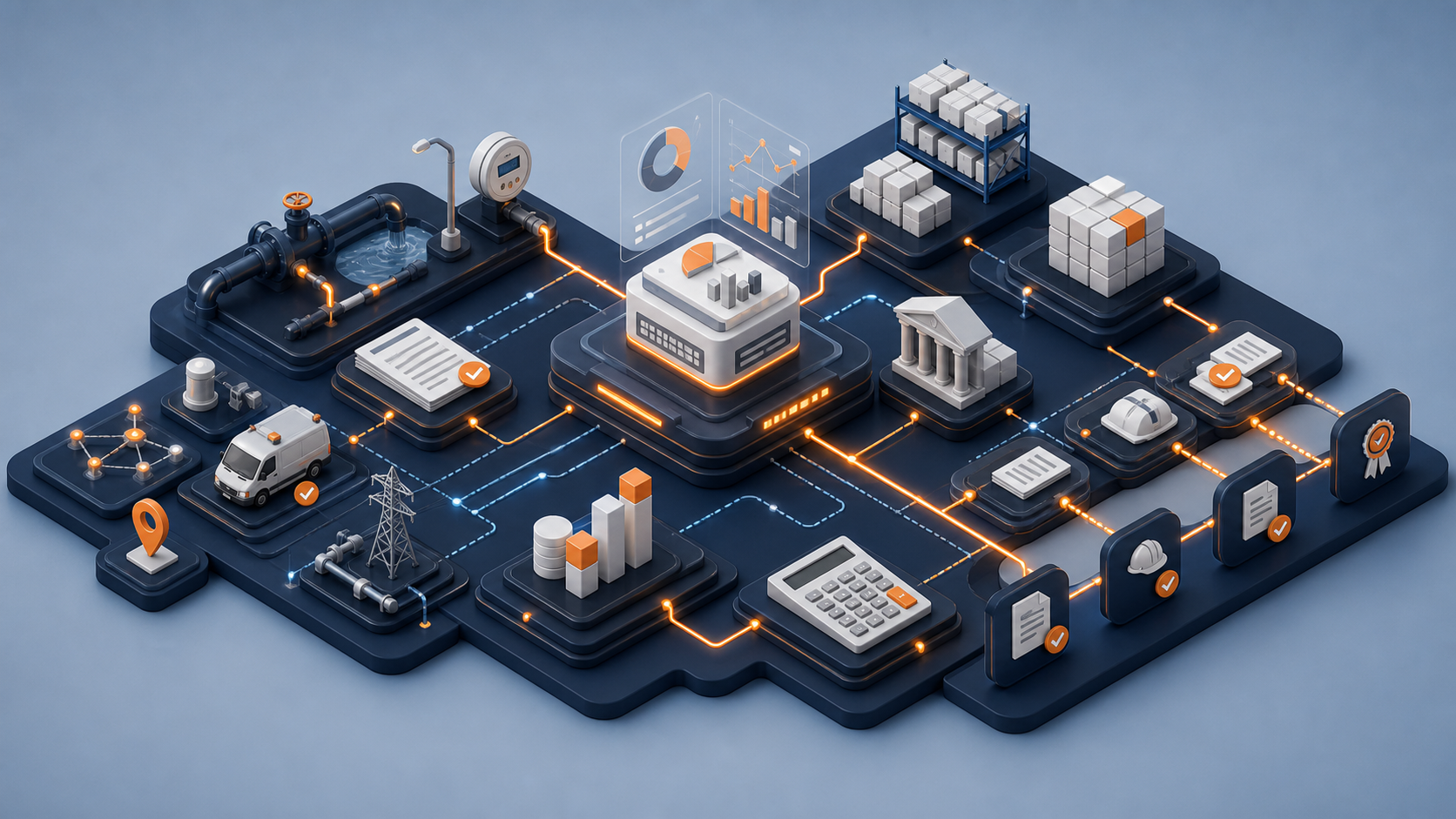
Materials used, work orders completed, investments delivered, invoices issued and payments received should flow directly into financial statements, budget monitoring and period-end close. This principle underpins UMARP Finance.

Illustration showing operational records feeding accounting, budgets, electronic documents and decision support
Consistent financial recordsRevenue, expenses, stock, assets and progress payments in one system
Decision supportSee budgets, actuals, investments and operating costs throughout the period
Operational and Financial Reconciliation

Keep finance in step with operations

Alignment between operational activity and financial records
Operational activity and accounting are two views of the same underlying data.

In a utility, finance needs a timely view of work completed, materials used, investments delivered and invoices issued. Accounting should reflect operations as they happen.

This approach reduces period-end data collection and reconciliation. Managers can see budget variances, investment progress and financial impacts before the reporting period closes.

Financial management insightFinance provides a current view of operational activity rather than waiting for records at the end of the process.
Accounting frameworkVUK/TFRS reporting, electronic documents, account balances and period-end close use consistent data.
Asset valueConnect investments, fixed assets, depreciation and progress payments to verified operational delivery.
Core Capabilities

Capabilities from general ledger to progress payments

01General Ledger

Accounting aligned with VUK and TFRS

Manage the chart of accounts, journals, account balances, transfers, exchange differences, adjustments and period-end close in one accounting model. Support EPDK and internal reporting from the same records.

02Electronic Documents and Ledgers

Keep electronic records connected to accounting

Produce e-Fatura, e-Arşiv and e-Defter outputs in line with UBL-TR and Turkish Revenue Administration technical specifications. Electronic documents remain traceable to the underlying financial records.

03Budget Management

Compare plans with actuals throughout the period

Plan budgets by department, project and cost center. Monitor actuals against targets and track operating expenditure without waiting for period-end reports.

04Fixed Assets

Align asset life with financial value

Manage acquisition, registration, inventory, depreciation, revaluation, assignment and disposal alongside EAM asset life cycles.

05Procurement and Inventory

Trace materials to their costs

Connect purchasing, stock, warehousing and field consumption in real time. Materials used on site reduce stock balances and are assigned to the work order, asset and cost center.

06Projects and Progress Payments

An auditable path from progress to payment

Connect project plans, budgets, measured quantities, verified locations, site evidence and payment approvals. Reduce the risk of paying for unverified work.
Traceability

From operational records to financial statements

RecordDocumentBudgetStockAssetProgress PaymentsReport
OutcomesVUK/TFRS financial statements, electronic documents, budget-to-actual visibility and controlled progress payments.
Audit trailJournal entries, approval histories, electronic ledger records, payment verification and close controls.
Connected dataCIS revenue and collections, EAM assets and depreciation, FOM materials and costs, and Compliance regulatory reporting.
Next Step

Let’s review your financial workflows

We can assess your accounting model, electronic document requirements, budgets and actuals, fixed assets, procurement, progress payments and platform connections.

  • Assess financial records and period-end close processes
  • Review budget, stock, fixed-asset and payment traceability
  • Plan connections with CIS, EAM, FOM and Compliance